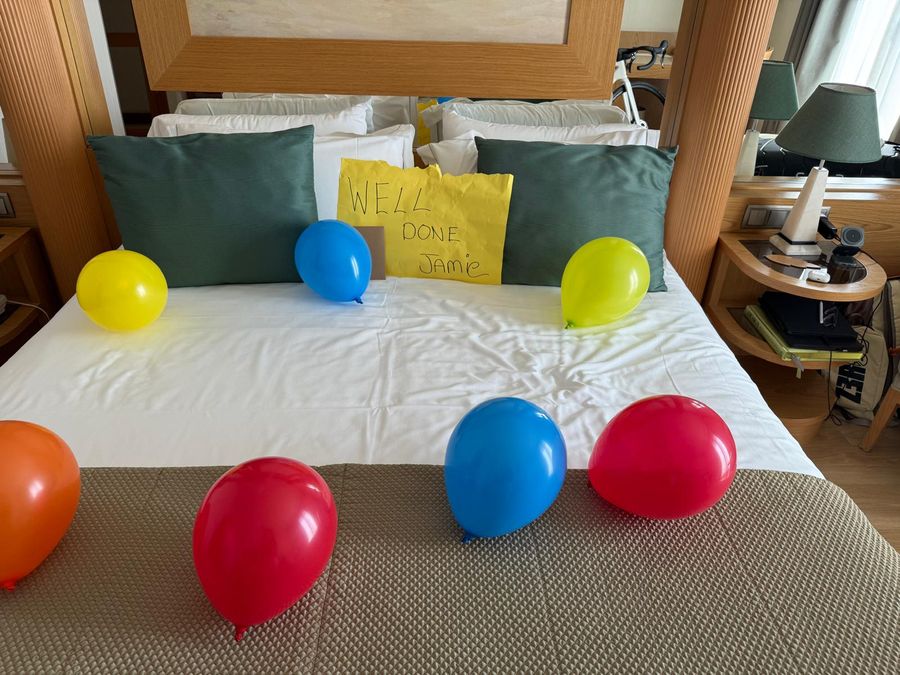
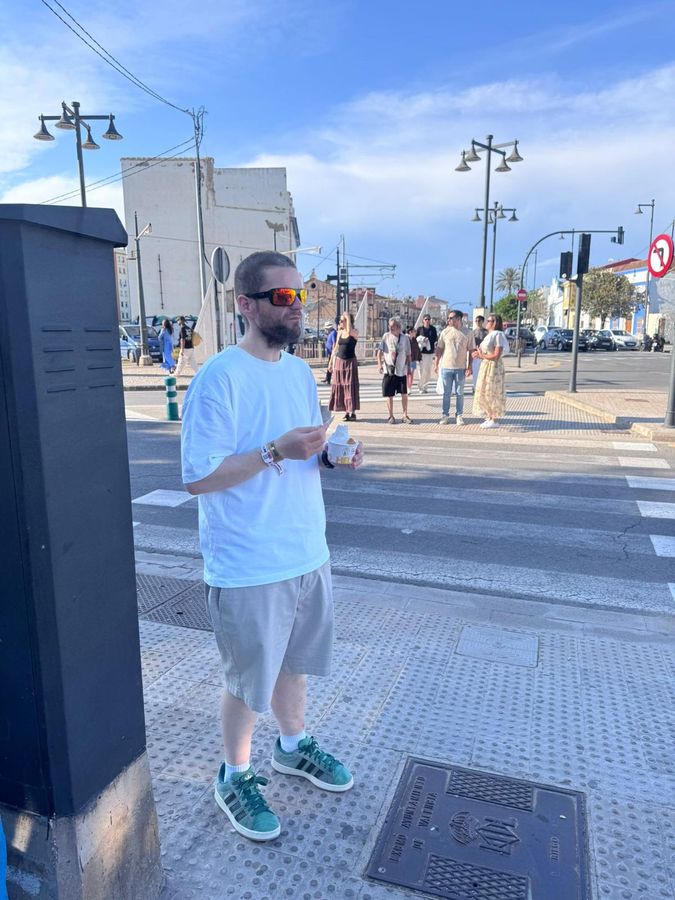
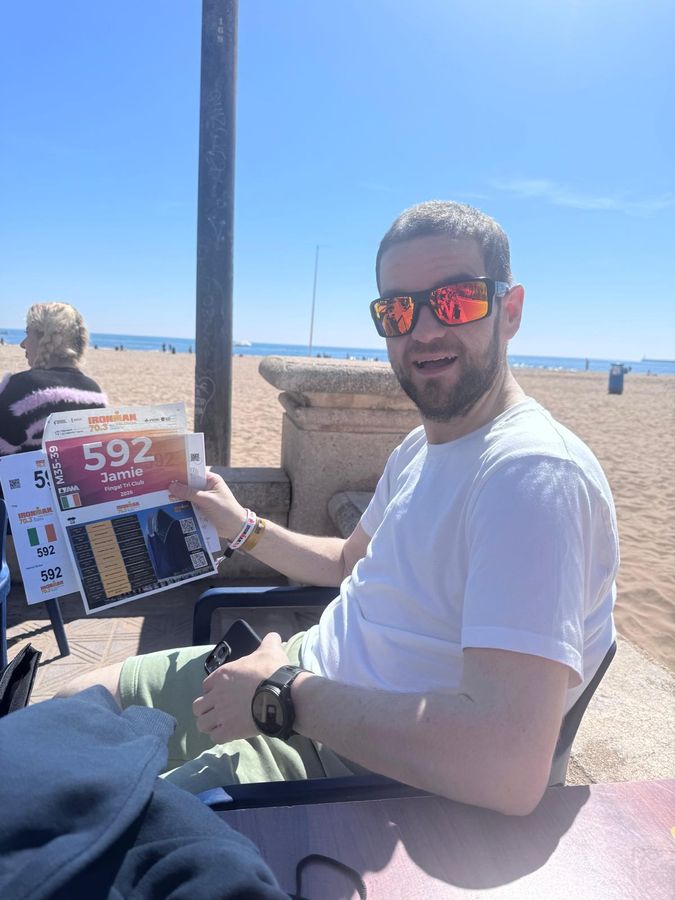
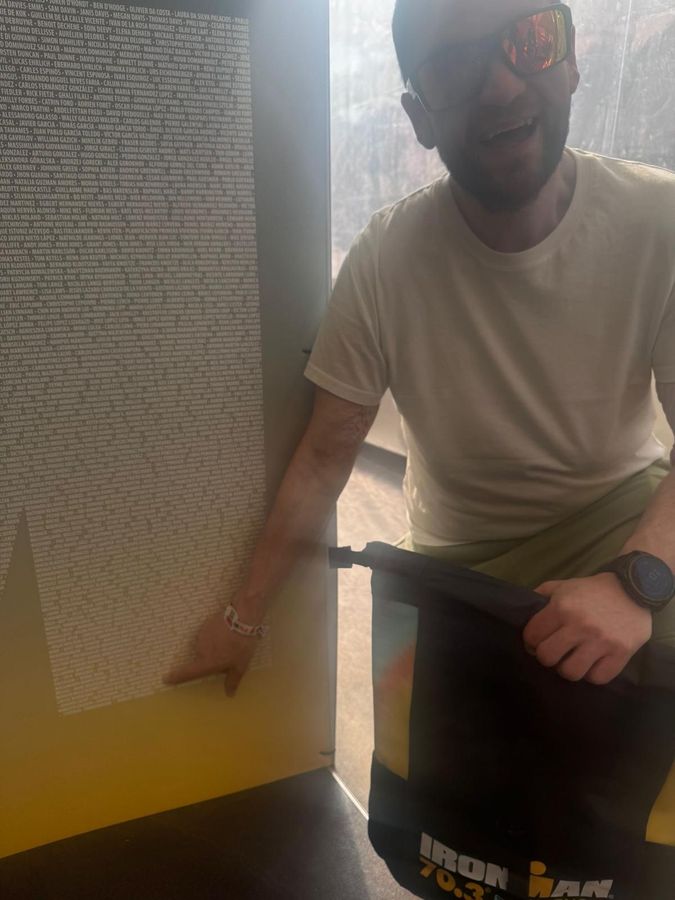
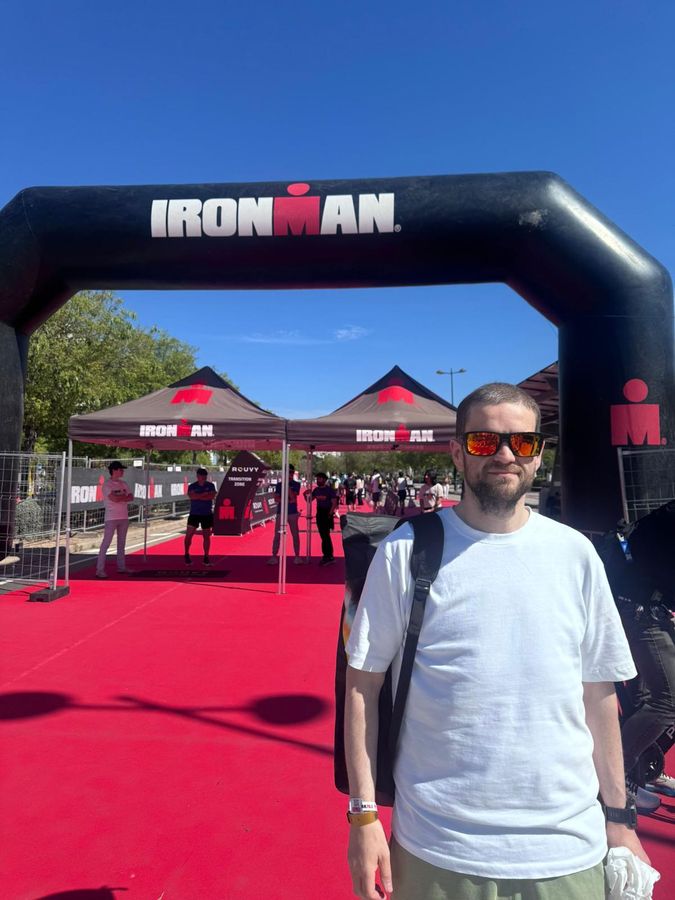
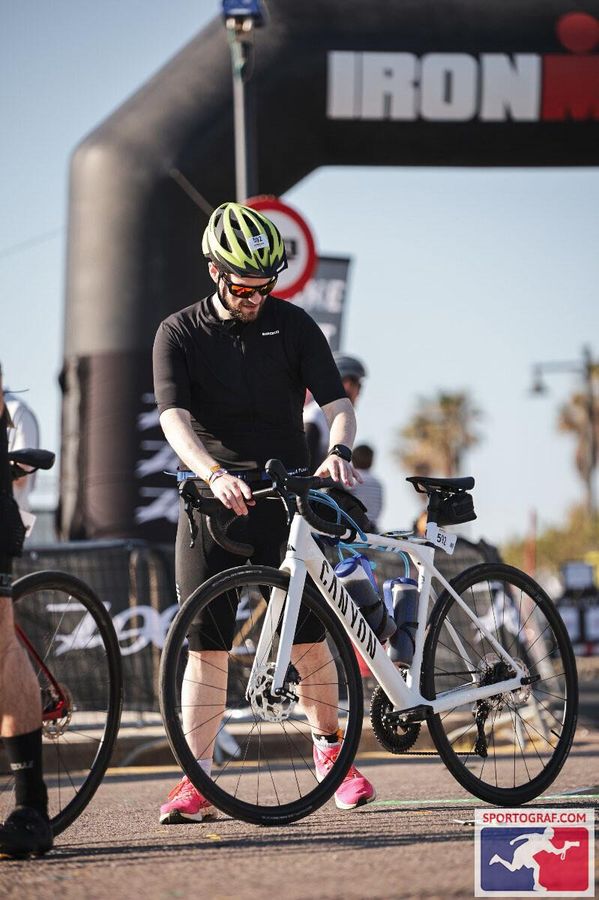
Three and a half years before this start line I weighed 190 kilograms. Race week in Valencia was the payoff for everything since: collecting number 592 with Fingal Tri Club printed under my name, racking the Canyon, finding myself on the participant wall. Whatever happened on Sunday, standing there at all was already a result. Then Sunday happened.
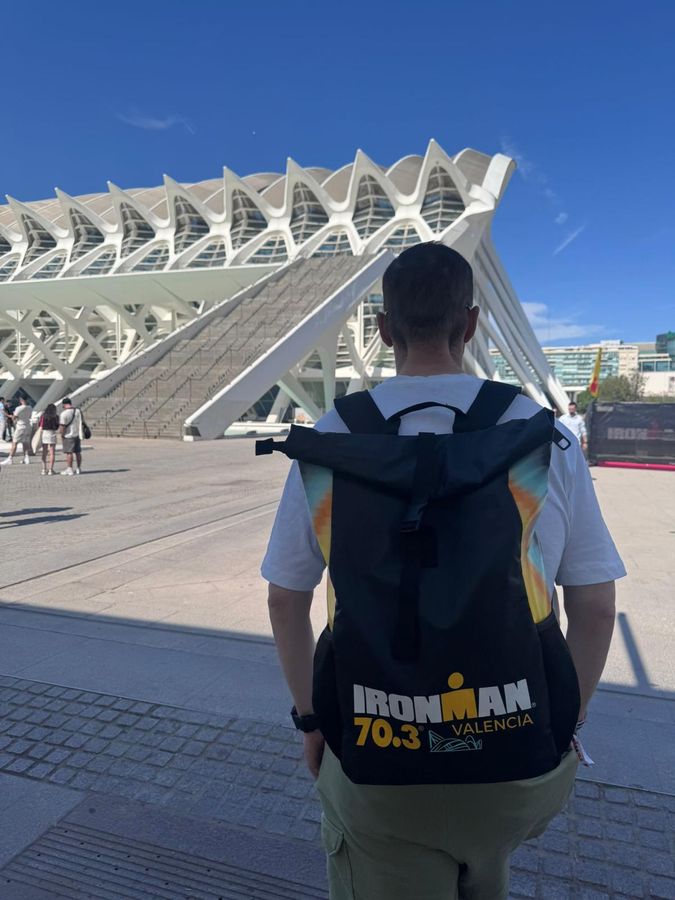
The swim
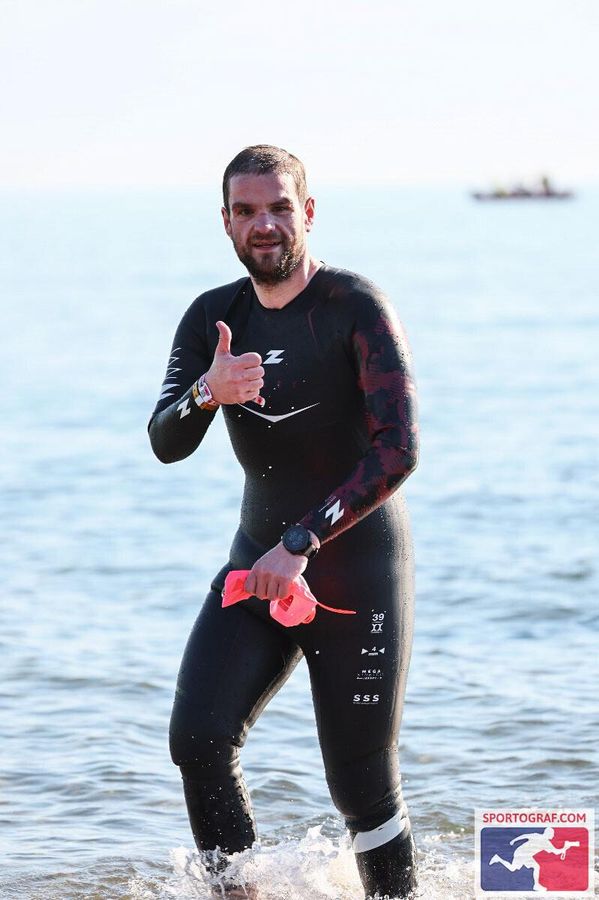
Out of the water in 52:18 for the 1.9k, which is 2:48 per 100m. The heart rate data tells the real story: an average of 131, controlled the whole way. The swim was never the problem. I exited calm, on plan, with plenty left.
The bike
First, transition: 12 minutes 56 seconds in T1. Nearly thirteen minutes standing still. That is free time handed back, and one of the easiest fixes on the whole list.
On the bike the numbers looked decent on the surface: 21.7 km/h average, quicker than my training baseline, over a course serving up 446m of climbing at 9.6m per kilometre. But my heart rate was averaging 152 against a max of 173. For comparison, my easy rides sit around 124. I was riding at threshold from early on, roughly 82% of max, on a leg that needed to last 90 kilometres and leave something for a half marathon.
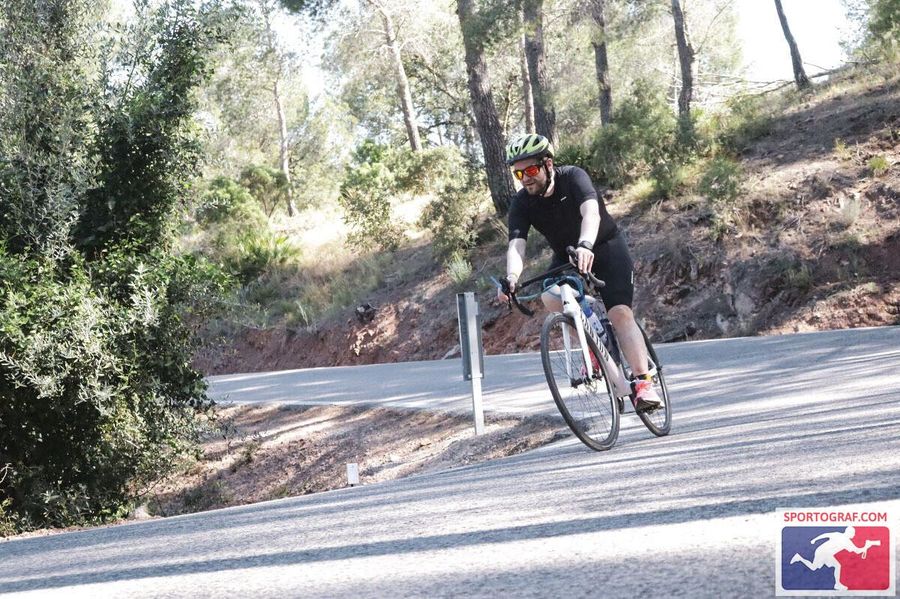
Kilometre 46
The file shows exactly where it unravelled: the mid-course climbing block. Speed dropped to 16 km/h and my heart rate stayed pinned at 154 to 157. Working harder, going slower. At 46.4 kilometres, 2 hours and 8 minutes into the bike, I was pulled from the course.
Here is the part that still stings. I ran the numbers afterwards, and at my pace I would have made the bike cutoff with 10 to 15 minutes to spare, leaving three hours for the run. Loads of time. In the moment I did not know my own maths well enough to make the case. That lesson, and nine others, got their own page: ten things Valencia taught me.
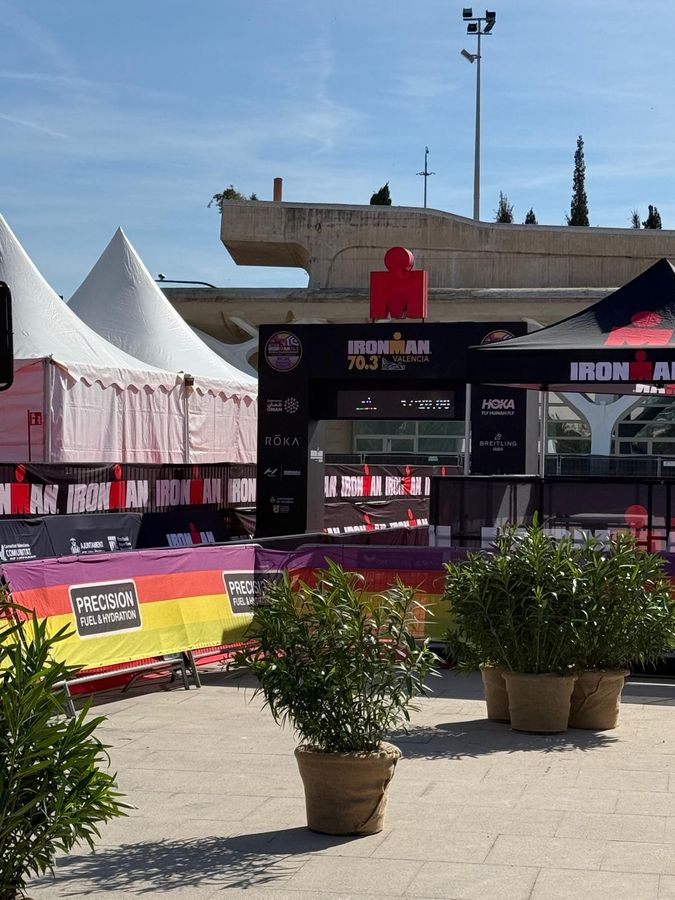
What 46km taught me
A DNF is a data point, not a verdict. And this one came with unusually clear data. Three lessons are going into the Cervia build:
One: this was an aerobic durability problem, not a strength or willpower problem. The engine redlined too early because the base was not deep enough to hold race speed at a sustainable heart rate. The winter block exists to fix exactly that, and speed-at-heart-rate is now the number I train by.
Two: thirteen minutes in T1 is a choice, not a fact of life. Practising transitions costs nothing and pays back every race.
Three: the swim is a strength to build on, not a weakness to fear. Calm, controlled, repeatable.